

For many students in technical fields, the terms “CPU cores” and “threads” are more than just specs on a sticker; they are the literal engine behind their academic success. If you have ever tried to run a Linux virtual machine (VM) while also having thirty browser tabs open, a CAD program, and a coding IDE, you have experienced the performance tug-of-war. Understanding how CPU multi-threading impacts virtual machines is crucial for anyone setting up a home lab or working on complex academic projects. In this article, we will break down the science of threading and how it changes the way you handle heavy workloads.
When we talk about multi-threading, we are looking at a CPU’s ability to manage multiple sequences of instructions at the exact same time. For a student, this technology is a lifesaver because it prevents the entire computer from locking up when one program gets “stuck” or starts a heavy calculation. This level of multitasking is exactly why many students turn to professional Assignment Writing Services like myassignmenthelp to manage their written workloads while they focus on the high-level technical configurations of their virtual labs. By delegating the heavy documentation and essay tasks, they ensure their academic performance remains as smooth as their PC’s processing speed.
Understanding the Basics: Cores vs. Threads
To understand virtual machines, you first have to understand the difference between a physical core and a logical thread. A core is a physical “brain” inside your processor. If you have a quad-core CPU, you have four physical brains. Multi-threading (often called Hyper-Threading by Intel or SMT by AMD) is a trick that allows each brain to handle two tasks at once.
Think of a chef in a kitchen. A single core without multi-threading is one chef with one hand. They can only chop one vegetable at a time. A core with multi-threading is like a chef who can use both hands—while one hand is chopping, the other is reaching for the next ingredient. This doesn’t double the speed of a single task, but it drastically improves the “throughput,” or the amount of work finished in an hour.
How Virtual Machines Use Threads
Virtualization software, such as VMware, VirtualBox, or Hyper-V, takes these physical resources and “slices” them up. When you create a virtual machine, you assign it “vCPUs” (virtual CPUs). These vCPUs are mapped directly to the threads of your host processor.
If your host CPU is a 6-core/12-thread chip, you have 12 logical processors available to distribute. If you give a VM 4 vCPUs, it feels like it has a dedicated 4-core processor. However, the magic of multi-threading allows the host OS to switch between the VM’s tasks and the host’s tasks almost instantly. Without multi-threading, the VM would have to wait its turn for a physical core to become completely free, leading to “stuttering” or lag in your virtual environment.
The Benefit for Academic Lab Projects
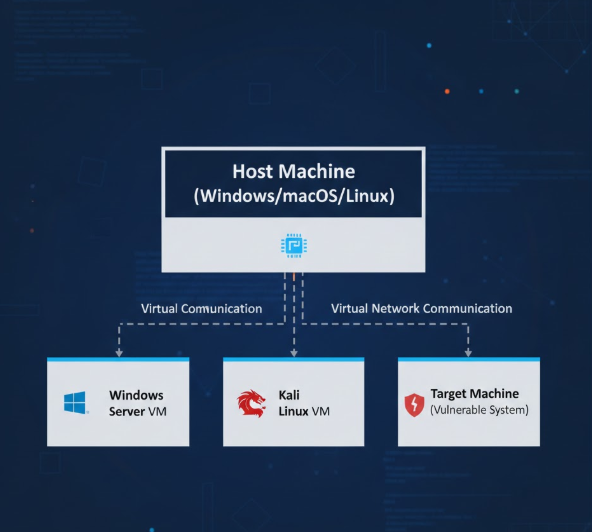
In an academic setting, lab projects often require running a “Mini-Network.” For example, a cybersecurity student might need to run a Windows Server VM, a Kali Linux VM, and a target machine all at once. This is where multi-threading becomes the hero of the story.
- Concurrency: Multiple VMs can execute instructions simultaneously without one VM “starving” the others for power.
- Isolation: If one VM crashes due to a heavy script or a “fork bomb” in a coding project, the multi-threaded host can isolate that thread, keeping your other work safe.
- Reduced Latency: Lab simulations, such as networking packets moving through a virtual router, require quick response times. Multi-threading reduces the “wait time” for the CPU.
For students specializing in tech, the technical requirements can be overwhelming. This is where specialized Information Technology Assignment Help becomes essential, as it allows students to focus on these complex VM architectures while experts assist with the theoretical and descriptive parts of the lab reports.
Identifying the “Bottleneck” in Your Lab
Even with a high-thread-count CPU, you can still hit a performance wall. This is known as a “CPU Bottleneck.” This happens when you assign more vCPUs than your physical threads can handle. This is called Overprovisioning.
If you have 8 threads but you try to run four VMs with 4 vCPUs each, you are asking for 16 threads of work. The CPU has to perform “Context Switching,” which is the process of saving the state of one task and loading another. If it does this too fast and too often, the overhead actually slows the computer down. For a smooth lab experience, always keep your total assigned vCPUs equal to or slightly less than your total physical threads.
Conclusion: Future-Proofing Your Education
As academic projects become more data-intensive, the reliance on virtual machines and multi-core processing will only grow. Whether you are compiling code, running ethical hacking simulations, or managing a database, your CPU’s threading capability is the foundation of your productivity. By understanding these technical nuances, you can build a better lab, manage your time more effectively, and ensure that your hardware never stands in the way of your grades.
Frequently Asked Questions
1. How many CPU threads should I allocate to a single virtual machine?
Ideally, you should allocate only as many threads as the specific task requires. For most standard lab projects, 2 to 4 threads provide a smooth experience without starving your host operating system of necessary power.
2. Does multi-threading actually double the speed of my projects?
No, it does not double the raw speed of a single task. Instead, it improves efficiency by allowing your processor to manage multiple smaller tasks at once, preventing the system from slowing down when running several programs simultaneously.
3. Can I run virtual machines on a processor that doesn’t support multi-threading?
Yes, you can, but you will likely experience significant lag and “stuttering.” Without multi-threading, the processor can only handle one instruction stream per core, making it difficult to balance the demands of both the host and the guest software.
4. What happens if I assign more threads than my hardware actually has?
This leads to a situation called overprovisioning. Your computer will spend more time switching between different tasks than actually executing them, which results in a noticeable drop in performance across all your open applications.
About The Author
Min Seow is a dedicated contributor at myassignmenthelp, where they share insights on the intersection of hardware performance and modern student life. Min is passionate about helping the next generation of tech enthusiasts reach their full potential.